
Why Shopify Revenue Is Not the Same as Profit
 Brian @brian
·
·
7 min read
26 views
Brian @brian
·
·
7 min read
26 views
One of the biggest mistakes Shopify store owners make is believing that revenue equals profit.
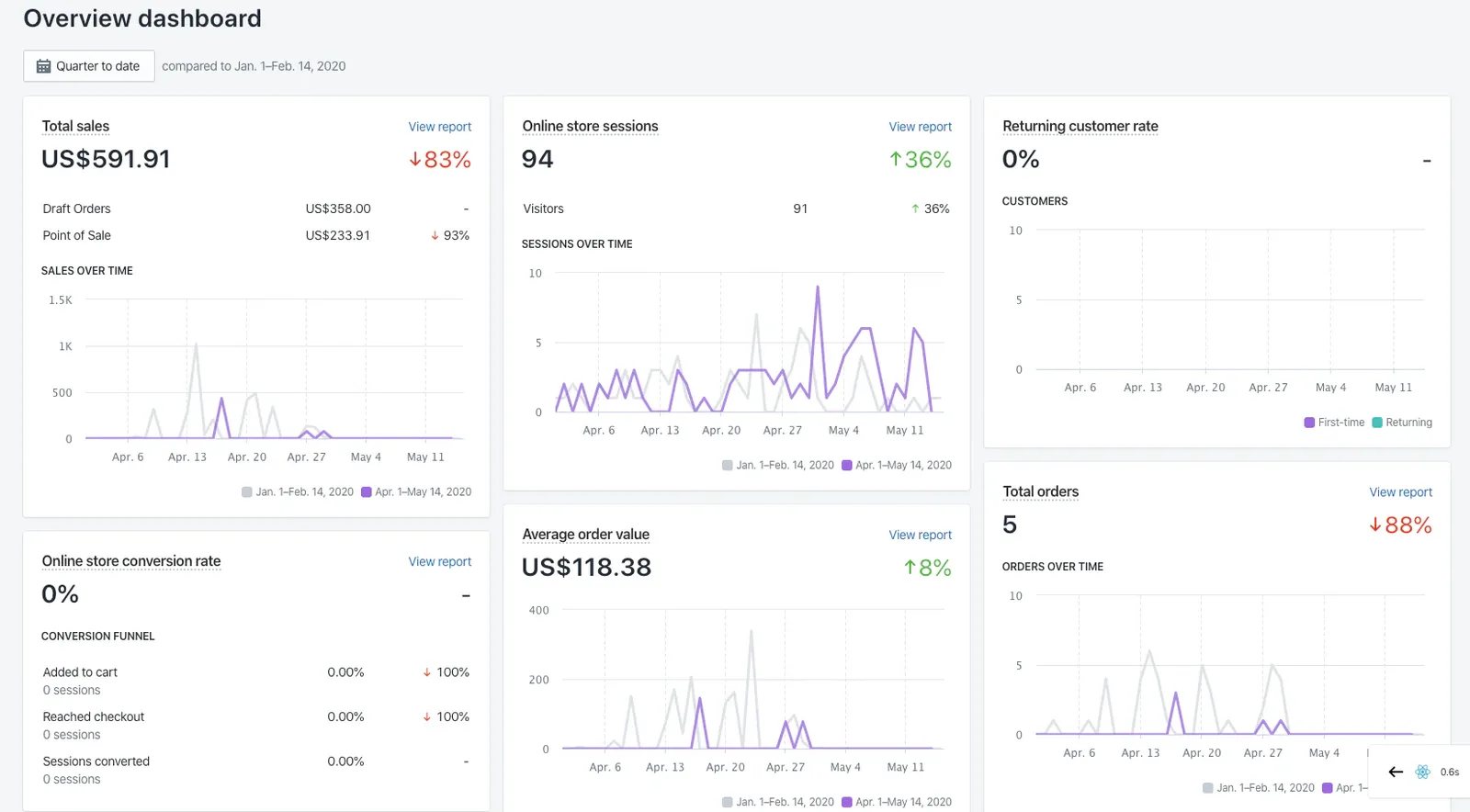
You launch a store, make your first sales, and open your Shopify dashboard.
You see:
- $1,000 in sales
- $5,000 in sales
- $10,000 in sales
It feels exciting.
Many new ecommerce entrepreneurs immediately think:
"I made $10,000 this month."
Unfortunately, that's usually not true.
In reality, your Shopify revenue and your Shopify profit are two completely different numbers.
A store can generate thousands of dollars in revenue while earning very little actual profit.
Some stores even lose money despite producing impressive revenue figures.
Understanding the difference between revenue and profit is one of the most important financial skills any Shopify store owner can learn.
In this guide, you'll learn exactly why Shopify revenue is not the same as profit, how to calculate your real profit, and why tracking profit accurately can be the difference between a successful ecommerce business and a failing one.
What Is Shopify Revenue?
Revenue is the total amount of money generated from customer purchases before any expenses are deducted.
Revenue is often referred to as:
- Gross Revenue
- Sales Revenue
- Total Sales
- Gross Sales
For example:
If you sell:
100 products
At:
$50 each
Your revenue would be:
100 × $50 = $5,000
Shopify reports this as sales revenue.
At first glance, seeing $5,000 looks fantastic.
However, revenue only tells part of the story.
Revenue does not account for the money required to generate those sales.
That is where profit comes into the picture.
What Is Shopify Profit?
Profit is the money left over after all expenses have been deducted.
Profit shows how much money your business actually keeps.
The basic formula is simple:
Profit = Revenue - Expenses
Unlike revenue, profit reflects the true financial health of your store.
A profitable store generates more money than it spends.
An unprofitable store spends more money than it earns.
This is why experienced ecommerce entrepreneurs focus heavily on profit rather than revenue.
Revenue creates excitement.
Profit creates wealth.
The Revenue Trap That Catches New Shopify Store Owners
Many Shopify beginners become obsessed with sales screenshots.
Social media is filled with screenshots showing:
- $10,000 days
- $50,000 months
- Six-figure stores
What most people don't see are the expenses behind those numbers.
A store generating:
$100,000 Revenue
Could have:
- $40,000 Product Costs
- $25,000 Ad Spend
- $8,000 Shipping Costs
- $3,000 Refunds
- $2,000 Software Costs
- $4,000 Transaction Fees
Total Expenses:
$82,000
Actual Profit:
$18,000
While $18,000 is still impressive, it is very different from $100,000.
This is why revenue alone can be misleading.
The Most Common Shopify Expenses
To understand profit, you must understand expenses.
Many store owners underestimate how many costs are involved in running an ecommerce business.
Product Costs
Every product sold has a cost.
For dropshipping stores, this is what you pay suppliers.
For private-label brands, this includes manufacturing costs.
If a product sells for:
$50
And costs:
$20
Your initial margin is only:
$30
Before any additional expenses.
Shipping Costs
Shipping can significantly impact profitability.
Costs may include:
- Supplier shipping fees
- Warehouse fulfillment
- Packaging
- International shipping
Many stores offer free shipping while absorbing these costs internally.
Advertising Costs
Advertising is often the largest expense.
Common advertising platforms include:
- Facebook Ads
- Instagram Ads
- TikTok Ads
- Google Ads
- Pinterest Ads
Many Shopify stores spend thousands of dollars monthly acquiring customers.
Ignoring advertising costs creates a false picture of profitability.
Shopify Fees
Running a Shopify store is not free.
Costs include:
- Shopify subscription plans
- Premium themes
- App subscriptions
- Third-party integrations
These recurring expenses reduce actual profit.
Payment Processing Fees
Every online transaction comes with processing fees.
Payment providers typically charge a percentage plus a fixed transaction fee.
While each fee seems small, they accumulate quickly as sales increase.
Refunds and Chargebacks
Not every sale stays a sale.
Customers may request:
- Refunds
- Returns
- Chargebacks
These directly reduce profit and should always be tracked.
Operational Costs
Operational expenses often include:
- Virtual assistants
- Freelancers
- Accountants
- Designers
- Customer support tools
- Email marketing software
Many growing stores spend hundreds or thousands monthly on operations.
A Real Shopify Revenue vs Profit Example
Let's examine a realistic scenario.
Store Revenue:
$10,000
Expenses:
Product Costs: $3,000
Advertising: $2,500
Shipping: $800
Shopify Fees: $150
Payment Processing: $320
Refunds: $400
Software Subscriptions: $180
Operations: $500
Total Expenses:
$7,850
Actual Profit:
$2,150
Many beginners would celebrate a $10,000 revenue month.
The reality is that the business earned $2,150.
This example demonstrates why revenue is not profit.
Why High Revenue Can Still Mean Low Profit
Many ecommerce stores chase revenue growth without monitoring profitability.
This creates dangerous situations.
Aggressive Discounting
Offering large discounts can increase sales volume.
However, margins often shrink dramatically.
A store may double revenue while earning less profit.
Rising Advertising Costs
Advertising costs continue increasing across most platforms.
A product that was profitable six months ago may no longer be profitable today.
Increasing Competition
More competitors often means:
- Higher customer acquisition costs
- Lower pricing power
- Reduced profit margins
Revenue can remain stable while profits decline.
The Hidden Costs Most Shopify Stores Ignore
Many stores fail to track several important expenses.
Failed Transactions
Payment failures often generate processing costs.
Currency Conversion Fees
International sales may involve exchange rate costs.
Inventory Losses
Damaged, missing, or unsold inventory impacts profitability.
Customer Support Costs
Support teams require time and money.
Tax Obligations
Sales tax and business taxes reduce take-home profit.
Ignoring these costs leads to inaccurate financial reporting.
Why Revenue Is Still Important
Revenue is not useless.
Revenue helps measure:
- Business growth
- Customer demand
- Market validation
- Sales performance
However, revenue should never be the only metric you track.
Successful businesses monitor revenue alongside profitability.
The healthiest stores increase both revenue and profit simultaneously.
Metrics Shopify Store Owners Should Track
Instead of focusing solely on revenue, monitor:
Net Profit
Your actual earnings after expenses.
Profit Margin
The percentage of revenue kept as profit.
Average Order Value
The average amount customers spend per purchase.
Customer Acquisition Cost
How much it costs to acquire each customer.
Lifetime Value
The total revenue generated by a customer over time.
Return on Ad Spend
The revenue generated from advertising.
Together, these metrics provide a complete picture of business performance.
Why Many Shopify Dashboards Don't Show Real Profit
Shopify excels at reporting revenue.
However, revenue reporting alone is not enough.
Many merchants still use:
- Spreadsheets
- Manual calculations
- Separate accounting tools
Because true profit requires combining data from multiple sources.
These sources include:
- Shopify
- Advertising platforms
- Suppliers
- Shipping providers
- Payment processors
Without consolidating all data, calculating real profit becomes difficult.
How a Shopify Profit Tracker Solves the Problem
A Shopify profit tracker automatically combines revenue and expenses into one dashboard.
Instead of manually calculating everything, store owners can instantly see:
- Daily profit
- Weekly profit
- Monthly profit
- Product profitability
- Store profitability
- Profit margins
This saves time and reduces reporting errors.
More importantly, it provides clarity.
Store owners know exactly where money is being made and where money is being lost.
Why Profit Tracking Matters More as You Scale
When stores are small, rough calculations might work.
As stores grow, complexity increases.
You may have:
- Hundreds of products
- Multiple suppliers
- Multiple advertising channels
- Thousands of orders
Manual tracking becomes nearly impossible.
A store generating six figures annually can lose substantial money if profit isn't monitored accurately.
The larger the business becomes, the more important profit tracking becomes.
Common Signs You're Focusing Too Much on Revenue
You might be overly focused on revenue if:
- You check sales daily but never review expenses.
- You celebrate revenue milestones without calculating profit.
- You don't know your profit margin.
- You don't track advertising costs.
- You rely entirely on Shopify sales reports.
These are warning signs that financial visibility may be lacking.
How Nugglets Helps Shopify Store Owners Track Real Profit
Nugglets was built to help ecommerce entrepreneurs understand what truly matters: profit.
Instead of relying solely on sales numbers, Nugglets helps merchants monitor:
- Revenue
- Product costs
- Shipping expenses
- Supplier costs
- Profit margins
- Order profitability
- Daily, weekly, and monthly profits
By centralizing important financial data into one dashboard, store owners gain a clearer understanding of business performance.
This allows faster decisions, better budgeting, and improved profitability.
Final Thoughts
Revenue and profit are not the same thing.
Revenue measures how much money enters your business.
Profit measures how much money stays in your business.
A Shopify store generating $50,000 per month in revenue might earn less profit than a store generating $15,000 per month if expenses are not controlled properly.
That is why successful ecommerce entrepreneurs obsess over profit tracking.
They understand that revenue is only the beginning of the financial story.
Real business success comes from understanding costs, managing margins, and maximizing profit.
If you want to build a sustainable Shopify business, stop focusing solely on sales numbers.
Track your real profit.
Monitor your expenses.
Know your margins.
Because at the end of the day, profit is what truly matters.
Updated related guide
- Read the updated Shopify revenue vs profit guide - this is the stronger, current version of this topic
- Shopify profit tracker - see how to track true net profit in one dashboard
- Shopify profit and loss - review the cost categories that belong in your P&L
Run your whole store from one dashboard
Track orders, suppliers, inventory and real profit with Nugglets.
See NuggletsKeep reading
How to Start Dropshipping on Amazon 2026

How to Calculate Your Break-Even ROAS for Shopify


Comments 0