
How to Track TikTok Shop Orders and Revenue
 Brian @brian
·
·
14 min read
3 views
Brian @brian
·
·
14 min read
3 views
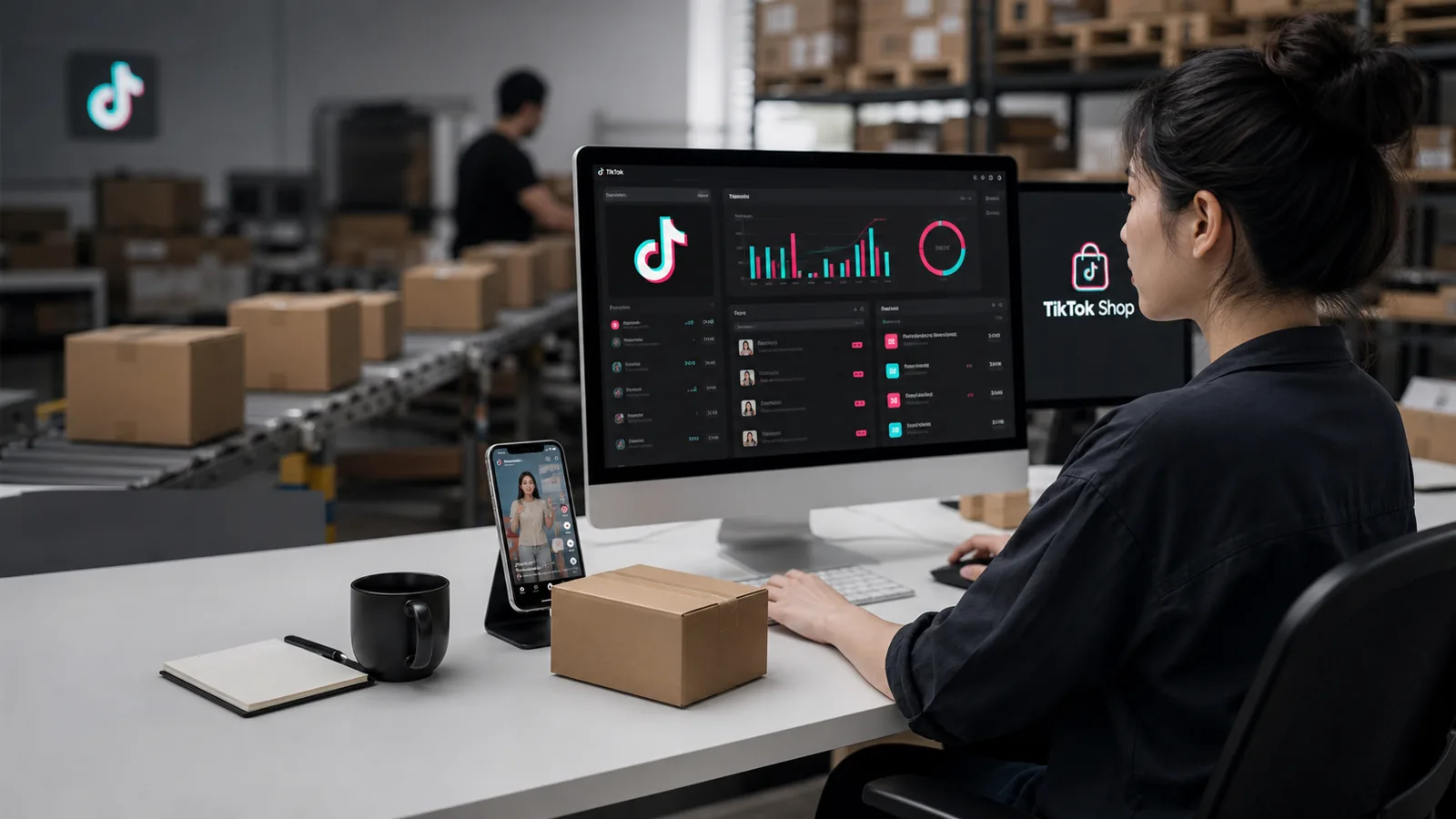
To track TikTok Shop orders well, treat every order as both a customer promise and a financial record. A sale is not finished when the dashboard number rises. It moves through payment confirmation, stock allocation, picking, packing, carrier handoff, delivery, possible return or refund, settlement, and finally profit reconciliation.
When those stages live in separate exports, inboxes, and dashboards, teams miss deadlines and owners mistake gross revenue for cash or profit. The solution is a repeatable order ledger with clear ownership.
The TikTok Shop order lifecycle
The exact interface and policy language can change, but the operating sequence is stable. TikTok's current US shipping policy explains that sellers must manage orders from creation through delivery and follow the applicable shipping responsibilities and service levels.
- Paid or confirmed. Verify the item, variant, quantity, address, and available inventory.
- Awaiting shipment. Pick the correct product, perform quality checks, pack it, and prepare the required documents.
- Carrier handoff. Confirm the parcel enters the carrier network and the first scan is recorded.
- In transit. Watch for stalled movement, exceptions, address issues, or customer questions.
- Delivered. Confirm final status and start the relevant settlement clock.
- Returned, refunded, or canceled. Record the operational reason and every financial reversal.
- Settled. Match expected proceeds with the amount and date received.
Build a minimum order ledger
A reliable ledger should preserve the fields needed for fulfillment, customer support, and finance. At minimum, capture:
- Order ID and order date
- Product, SKU, variant, and quantity
- Customer payment and platform-funded discount
- Seller-funded discount
- Current order and logistics status
- Shipping method, tracking number, carrier, and key timestamps
- Cancellation, return, and refund amounts and reasons
- Platform fees and creator or affiliate commission
- Product cost and seller-paid shipping cost
- Expected settlement, actual settlement, and variance
Do not overwrite history when a status changes. A timeline of changes makes it easier to explain late shipments, payment differences, and customer-service patterns.
Daily process for tracking TikTok Shop orders
1. Start with exception queues
Review policy alerts, customer messages, cancellation requests, returns, and orders close to a deadline before routine work. Exceptions become expensive when they age.
2. Reconcile paid orders with stock
Confirm that each paid order has allocatable inventory. If the same SKU sells on multiple channels, use a shared stock view or safety buffer so TikTok Shop does not promise units already sold elsewhere.
3. Track the first carrier scan
A printed label is not proof of movement. The first acceptance scan is a stronger operational checkpoint. TikTok's guidance distinguishes packing and label actions from actual carrier acceptance, so teams should monitor both.
4. Monitor aging shipments
Create an alert for orders with no scan, no movement, a failed delivery, or an approaching service deadline. Assign an owner and required next action.
5. Close the financial loop
At the end of each day, compare new orders, adjustments, cancellations, refunds, fees, and expected settlement. Investigate differences while the context is still fresh.
Revenue needs a clear definition
Teams often use the word revenue for several different numbers: order value, customer payment, gross merchandise value, amount after discounts, expected settlement, bank deposit, or net sales after refunds. Choose definitions and use them consistently.
A practical reporting stack separates:
- Gross order value: the value before cancellations, returns, and refunds.
- Net sales: completed sales after refunds and relevant adjustments.
- Expected settlement: the amount the platform is expected to remit.
- Cash received: the deposit actually matched to the bank.
- Contribution profit: net sales minus platform fees, creator commission, product cost, shipping, and other order-level costs.
Shipping method changes the workflow
TikTok's order-delivery guidance describes seller and platform shipping options and related label, package, and bulk workflows. Availability varies by account and market. Document which system owns the label, carrier selection, cost, tracking updates, and customer communication for each order.
Use controls that protect trustworthy data
Never create, manipulate, or recycle orders to inflate sales, rankings, or reviews. TikTok's fraudulent-order prevention requirements prohibit artificial orders and other misleading activity. Operational dashboards should make suspicious patterns easier to investigate, not easier to hide.
One view across every store
If TikTok Shop is only one channel, order tracking should not end in Seller Center. Normalize the same fields across TikTok Shop, Shopify, and other stores so an owner can compare fulfillment speed, refunds, net sales, and profit with the same definitions.
Explore the Nugglets TikTok Shop hub, try the interactive command-center demo, or create an account to prepare a calmer cross-channel order workflow.
How to track TikTok Shop orders with clear ownership
Tracking is not only a dashboard activity. It is a promise that every order has a known state, a responsible owner, and a next action. Define who monitors new orders, who controls inventory, who picks and packs, who handles carrier exceptions, who responds to customers, and who reconciles financial adjustments.
Create escalation thresholds before problems occur. An order with no first carrier scan after a defined interval should enter an exception queue. An inventory mismatch should pause allocation until confirmed. A repeated address or fraud concern should follow the platform's current review process. A return with a product-quality allegation should reach the catalog and supplier owners.
Use timestamps for each handoff. Without them, teams can see that an order is late but cannot identify where the delay began. Measure order confirmation, allocation, pick completion, pack completion, label creation, carrier acceptance, delivery, return request, refund, and settlement.
TikTok Shop order statuses as work queues
Each status should map to an operational meaning. Paid or confirmed orders require stock and fulfillment action. Awaiting-shipment orders should be grouped by deadline, warehouse, shipping method, and carrier. In-transit orders need exception monitoring. Delivered orders become candidates for settlement and customer-experience analysis. Canceled, returned, or refunded orders require both inventory and financial treatment.
Avoid building a report that only counts statuses. Add aging. Ten awaiting-shipment orders created an hour ago may be healthy, while two that have aged past the expected handoff need immediate attention. Show the oldest orders and the reason each one remains open.
Keep a separate exception reason instead of relying on free-form notes. Useful categories include out of stock, address issue, warehouse delay, label error, carrier no-scan, carrier delay, customer cancellation, product damage, wrong item, and policy review.
How to reconcile TikTok Shop revenue daily
Begin with a daily control total: opening open orders, new paid orders, fulfilled orders, cancellations, returns, refunds, and closing open orders. The movement should reconcile. If it does not, identify the missing or duplicated records before adding financial calculations.
Next, separate commercial value from cash timing. Record gross order value, seller-funded discount, platform-funded discount, customer refund, tax treatment, shipping charged, platform fees, creator commission, and expected settlement. Use the exact fields available for your market and account, and document how each maps into management reporting.
Finally, attach cost. Product cost, seller-paid shipping, packaging, warehouse handling, and other variable costs turn a revenue report into a contribution-profit report. Use the same order identifier throughout so finance can trace a summary to source data.
Tracking TikTok Shop fulfillment performance
Fulfillment metrics should measure customer outcomes and controllable processes. Suggested measures include:
- Time from paid order to inventory allocation
- Time from allocation to pick and pack completion
- Time from label creation to first carrier scan
- Time from carrier acceptance to delivery
- Orders approaching or missing a service deadline
- Cancellation rate caused by stock or fulfillment
- Delivery-exception rate by carrier and shipping method
- Wrong-item, damaged-item, and missing-item rate
Segment performance by warehouse, carrier, product, day of week, and promotion. Averages may hide a weekend staffing gap, one unreliable carrier lane, or packaging that fails for a specific product.
Returns and refunds belong in the order ledger
Do not treat returns as a separate monthly deduction with no operational history. Connect each return to the original order, SKU, content or creator attribution when available, customer reason, inspection result, refund, recoverable inventory, shipping loss, and fee adjustment.
Return reasons are often imperfect, so combine structured codes with inspection notes. Review the leading reasons weekly. A high return rate can signal poor product quality, inaccurate images, unclear sizing, aggressive claims, variant confusion, damage in transit, or the wrong audience.
Calculate profit again after the return. Some costs may reverse while others remain. The post-return result is the correct measure for product and campaign decisions.
Settlement tracking and variance investigation
Expected settlement and actual deposit can differ because of timing, returns, fees, reserves, adjustments, or the set of orders included. Create a settlement record with the platform period, included order IDs, expected amount, platform-reported amount, bank amount, date, and variance reason.
Use a materiality rule, but do not ignore small recurring differences. A consistent mapping error can become large at scale. Assign each unexplained variance to an owner and keep it open until resolved.
Reconciliation should be reproducible. Another team member should be able to follow the source records and arrive at the same amount without relying on private knowledge.
How to track TikTok Shop orders across multiple channels
Multichannel sellers need a shared order model. Map channel-specific statuses into common stages such as confirmed, allocated, ready to ship, in transit, delivered, canceled, returned, refunded, and settled. Preserve the original status for traceability.
Use a channel prefix or source field with the original order ID so identifiers do not collide. Map products to one internal SKU, use a consistent time zone, and define revenue and refund recognition once. Without these controls, the combined dashboard can be visually clean but financially wrong.
Inventory is especially sensitive. Decide whether a central inventory system allocates units to each channel or whether channels maintain buffers. Monitor synchronization delay and failed updates. During a high-velocity promotion, reduce the acceptable delay or reserve additional safety stock.
Order tracking dashboard design
A useful dashboard begins with action. Put urgent exceptions, aging orders, inventory risks, and settlement variances above decorative charts. Show totals with definitions and allow the operator to drill into the orders behind them.
Recommended sections include:
- Today: new orders, units, net sales, cancellations, and contribution profit.
- Fulfillment queue: orders by stage, deadline, age, warehouse, and carrier.
- Exceptions: no scan, stalled transit, stock mismatch, return, refund, and policy review.
- Economics: fees, creator commission, product cost, shipping, refunds, and margin.
- Settlements: expected, received, timing difference, and unexplained variance.
Label demo or estimated data clearly. Do not mix estimated profit with finalized cost without showing the difference.
Weekly TikTok Shop order review
Bring operations, customer service, merchandising, content, and finance together for a short review. Start with unresolved exceptions, then examine products or campaigns that created unusual volume. Ask whether service quality and profit held up.
Review the five oldest open orders, leading cancellation reason, leading return reason, slowest fulfillment step, largest settlement variance, most profitable SKU, and least profitable high-volume SKU. End with named actions, owners, and dates.
The purpose is not to admire the dashboard. It is to improve the system that produces the data.
A scalable order-tracking process
As volume grows, automate collection and alerts but keep human controls around exceptions and financial reconciliation. Use APIs or approved integrations where appropriate, log failed imports, prevent duplicate records, and monitor the freshness of each data source.
Test changes with a limited set of orders before a full rollout. A status mapping, SKU mapping, or time-zone error can affect every report. Maintain a rollback plan and a reconciliation check after deployments.
A scalable process gives every order a traceable path from customer payment to delivery, adjustment, settlement, and profit. That is the standard to aim for whether the shop has ten orders a week or thousands a day.
Audit order tracking after peak sales events
Run a focused audit after promotions, livestreams, or unexpected demand spikes. Confirm that every order was imported once, every tracking number belongs to the correct parcel, every cancellation and refund reached the financial ledger, and every settlement difference has an explanation. Compare physical inventory with available stock and document any manual correction. This final control turns a busy sales period into trustworthy operational data that can support the next forecast, staffing plan, inventory purchase, and creator campaign.
Run your whole store from one dashboard
Track orders, suppliers, inventory and real profit with Nugglets.
See NuggletsKeep reading
How to Calculate Real TikTok Shop Profit After Fees
TikTok Shop Seller Center: A Practical Operator's Guide



Comments 0