
9 Profitable Ecommerce Business Ideas for Your Next Venture
 Brian @brian
·
·
4 min read
52 views
Brian @brian
·
·
4 min read
52 views
The ecommerce industry has transformed the way businesses operate. Today, entrepreneurs can launch online stores, sell products globally, and build scalable businesses with fewer barriers than ever before.
According to industry research, global ecommerce sales continue to grow year after year as consumers increasingly prefer online shopping. This growth creates opportunities for entrepreneurs to enter markets that were once dominated by large retailers.
However, choosing the right ecommerce business model can make a significant difference in your long-term success. Some business models require inventory and logistics management, while others can be started with little more than a laptop and internet connection.
In this guide, we'll explore nine profitable ecommerce business ideas, discuss their advantages and challenges, estimate startup costs, and explain how entrepreneurs can get started.
Ecommerce Business Ideas Comparison
| Business Idea | Startup Cost | Difficulty | Scalability |
|---|---|---|---|
| Dropshipping | Low | Easy | High |
| Print-on-Demand | Low | Easy | Medium |
| Digital Products | Very Low | Medium | Very High |
| Subscription Boxes | Medium | Medium | High |
| Private Label Brands | Medium-High | Medium | Very High |
| Handmade Products | Low-Medium | Medium | Medium |
| Niche Ecommerce Store | Medium | Medium | High |
| Online Marketplace | High | Hard | Very High |
| Ecommerce Software | Medium-High | Hard | Extremely High |
1. Dropshipping Business
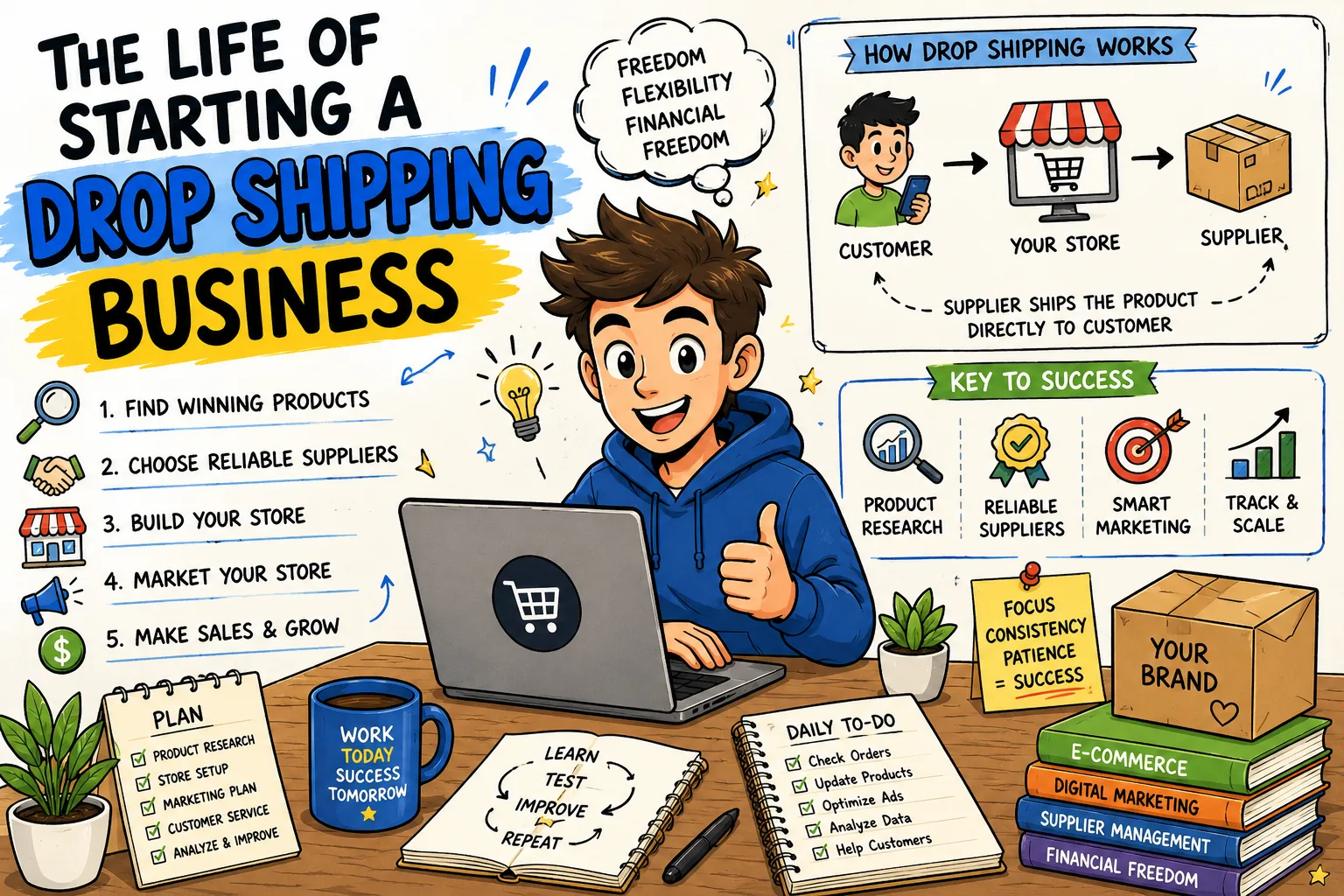
Dropshipping remains one of the most popular ecommerce business ideas because it allows entrepreneurs to sell products without purchasing inventory upfront.
When customers place orders, suppliers handle product storage, packing, and shipping. This means business owners can focus on product research, marketing, customer service, and scaling operations.
Advantages
- Low startup costs
- No inventory management
- Easy product testing
- Flexible business model
- Global supplier access
Challenges
- Lower profit margins
- Supplier dependence
- High competition
Startup Cost
Estimated startup costs range from $100 to $1,000 depending on your ecommerce platform and advertising budget.
Revenue Potential
Successful dropshipping stores can generate anywhere from a few hundred dollars per month to six or seven figures annually.
Useful Resources:
Shopify:
https://www.shopify.com
AliExpress:
https://www.aliexpress.com
2. Print-on-Demand Business
Print-on-demand businesses allow entrepreneurs to sell customized products without maintaining inventory.
Products are created only after a customer places an order.
Popular products include:
- T-shirts
- Hoodies
- Mugs
- Posters
- Tote bags
- Phone cases
Advantages
- No inventory risk
- Custom branding
- Creative freedom
- Automated fulfillment
Challenges
- Competitive market
- Lower profit margins
- Product quality control
Startup Cost
Most entrepreneurs can start with less than $500.
Revenue Potential
Successful print-on-demand stores often generate recurring income through loyal customer bases and strong branding.
Useful Resources:
Printful:
https://www.printful.com
Printify:
https://printify.com
3. Digital Products Business
Digital products are one of the highest-margin ecommerce business models available.
Unlike physical products, digital goods require no inventory, manufacturing, or shipping.
Popular digital products include:
- Ebooks
- Courses
- Templates
- Software
- Design assets
- Membership content
Advantages
- Extremely high margins
- No shipping costs
- Instant delivery
- Unlimited scalability
Challenges
- Requires expertise
- Competitive markets
- Marketing effort
Startup Cost
Often less than $100.
Revenue Potential
Many digital product businesses scale to six and seven figures due to low overhead.
4. Subscription Box Business
Subscription boxes continue to grow because customers enjoy receiving curated products on a recurring basis.
Popular niches include:
- Beauty
- Fitness
- Coffee
- Snacks
- Pet products
- Gaming accessories
Advantages
- Recurring revenue
- Higher customer lifetime value
- Predictable cash flow
Challenges
- Inventory planning
- Customer retention
- Fulfillment logistics
Startup Cost
Typically $1,000 to $10,000 depending on inventory requirements.
Revenue Potential
Subscription businesses often generate stable monthly revenue due to recurring payments.
5. Private Label Ecommerce Brand
Private labeling involves sourcing products and selling them under your own brand name.
Many successful ecommerce brands started by private labeling products and building strong customer loyalty.
Advantages
- Brand ownership
- Better margins
- Greater control
- Long-term business value
Challenges
- Inventory investment
- Manufacturing management
- Brand building
Startup Cost
Usually $2,000 to $20,000 or more.
Revenue Potential
Private label brands often offer some of the highest long-term profit potential.
6. Handmade Products Business
Handmade products continue to attract customers seeking unique and personalized items.
Popular categories include:
- Jewelry
- Art
- Candles
- Home decor
- Personalized gifts
Advantages
- Premium pricing
- Unique products
- Strong customer loyalty
Challenges
- Production time
- Limited scalability
Startup Cost
Often between $200 and $2,000.
Revenue Potential
Handmade businesses can become highly profitable when combined with strong branding.
Useful Resource:
Etsy:
https://www.etsy.com
7. Niche Ecommerce Store
A niche store focuses on a specific audience rather than trying to sell everything.
Examples include:
- Camping gear
- Aquarium supplies
- Home gyms
- Pet accessories
- Gardening products
Advantages
- Easier marketing
- Stronger brand identity
- Reduced competition
Challenges
- Smaller audience
- Product limitations
Startup Cost
Usually between $500 and $5,000.
Revenue Potential
Niche stores often outperform general stores because they attract targeted customers.
8. Online Marketplace
Marketplaces connect buyers and sellers.
Examples include:
- Freelancer marketplaces
- Product marketplaces
- Service marketplaces
- Local directories
Advantages
- Multiple revenue streams
- Network effects
- High scalability
Challenges
- Difficult startup phase
- User acquisition challenges
Startup Cost
Can range from several thousand dollars to much more depending on development requirements.
Revenue Potential
Successful marketplaces often become highly valuable businesses.
9. Ecommerce Software
As ecommerce grows, merchants increasingly need software solutions.
This creates opportunities for SaaS businesses focused on:
- Product research
- Inventory management
- Supplier management
- Analytics
- Profit tracking
Nugglets is an example of this type of opportunity.
Nugglets aims to help ecommerce entrepreneurs manage product research, supplier relationships, profitability, and business analytics from one platform.
Learn More:
Advantages
- Recurring revenue
- High scalability
- Strong retention
Challenges
- Development costs
- Technical support
- Product maintenance
Startup Cost
Varies significantly depending on complexity.
Revenue Potential
Software businesses often offer some of the highest long-term revenue potential.
How to Choose the Right Ecommerce Business Idea
Before starting, ask yourself:
What is my budget?
Different business models require different levels of investment.
How much time can I commit?
Some models require daily operational involvement, while others can become highly automated.
What skills do I have?
Choose a business model that aligns with your strengths.
What are my long-term goals?
If you want recurring revenue, software and subscriptions may be ideal.
If you prefer physical products, private label and niche ecommerce stores may be better options.
Common Ecommerce Mistakes
Many entrepreneurs fail because they make avoidable mistakes.
Common mistakes include:
- Skipping product research
- Ignoring profit margins
- Choosing unreliable suppliers
- Neglecting customer support
- Failing to track analytics
- Quitting too early
Successful ecommerce businesses focus on continuous improvement.
Essential Tools for Ecommerce Entrepreneurs
Google Trends:
https://trends.google.com
Pinterest Trends:
https://trends.pinterest.com
TikTok Creative Center:
https://ads.tiktok.com/business/creativecenter
Google SEO Starter Guide:
https://developers.google.com/search/docs/fundamentals/seo-starter-guide
Ahrefs Blog:
https://ahrefs.com/blog
Semrush Blog:
https://www.semrush.com/blog
Shopify:
https://www.shopify.com
WooCommerce:
https://woocommerce.com
BigCommerce:
https://www.bigcommerce.com
Frequently Asked Questions
What is the most profitable ecommerce business?
Digital products, software products, subscription businesses, and private label brands often provide the highest profit margins.
Is ecommerce still profitable in 2026?
Yes. Ecommerce continues to grow globally and offers opportunities for businesses of all sizes.
Which ecommerce business is easiest to start?
Dropshipping and print-on-demand are generally the easiest due to low startup costs.
How much money do I need to start?
Some ecommerce businesses can be launched for under $100, while others may require several thousand dollars.
Can beginners start an ecommerce business?
Absolutely. Many successful entrepreneurs started with little experience and learned through testing and continuous improvement.
How long does it take to become profitable?
It varies by business model, but many ecommerce businesses require several months of consistent effort before becoming profitable.
Final Thoughts
The ecommerce industry continues to provide opportunities for entrepreneurs willing to learn, experiment, and build valuable businesses.
Whether you choose dropshipping, digital products, subscription boxes, private label brands, marketplaces, or ecommerce software, success comes from solving customer problems and delivering value consistently.
The most successful ecommerce businesses are not built overnight. They grow through product research, customer understanding, marketing, optimization, and persistence.
As ecommerce continues evolving, entrepreneurs who embrace data, technology, and operational efficiency will be best positioned for long-term success. Platforms like Nugglets aim to support that journey by helping ecommerce business owners make smarter decisions through product research, supplier management, analytics, and profitability tracking.
Run your whole store from one dashboard
Track orders, suppliers, inventory and real profit with Nugglets.
See NuggletsKeep reading
How to Start Dropshipping on Amazon 2026
How to Calculate Your Break-Even ROAS for Shopify


Comments 1
Personally my favorite