
How to Manage Multiple Shopify Stores Without Losing Your Mind
 Brian @brian
·
·
2 min read
1 views
Brian @brian
·
·
2 min read
1 views
Why Managing Multiple Shopify Stores Gets Hard Fast
The moment you launch a second Shopify store, your operational load more than doubles. You are now juggling separate dashboards, duplicated product catalogs, split inventory, and fragmented reporting. What worked for one store turns into context-switching chaos across many.
The good news: with the right systems, multi-store management becomes a strength rather than a burden. Here is how to keep everything under control.
1. Centralize Your Analytics
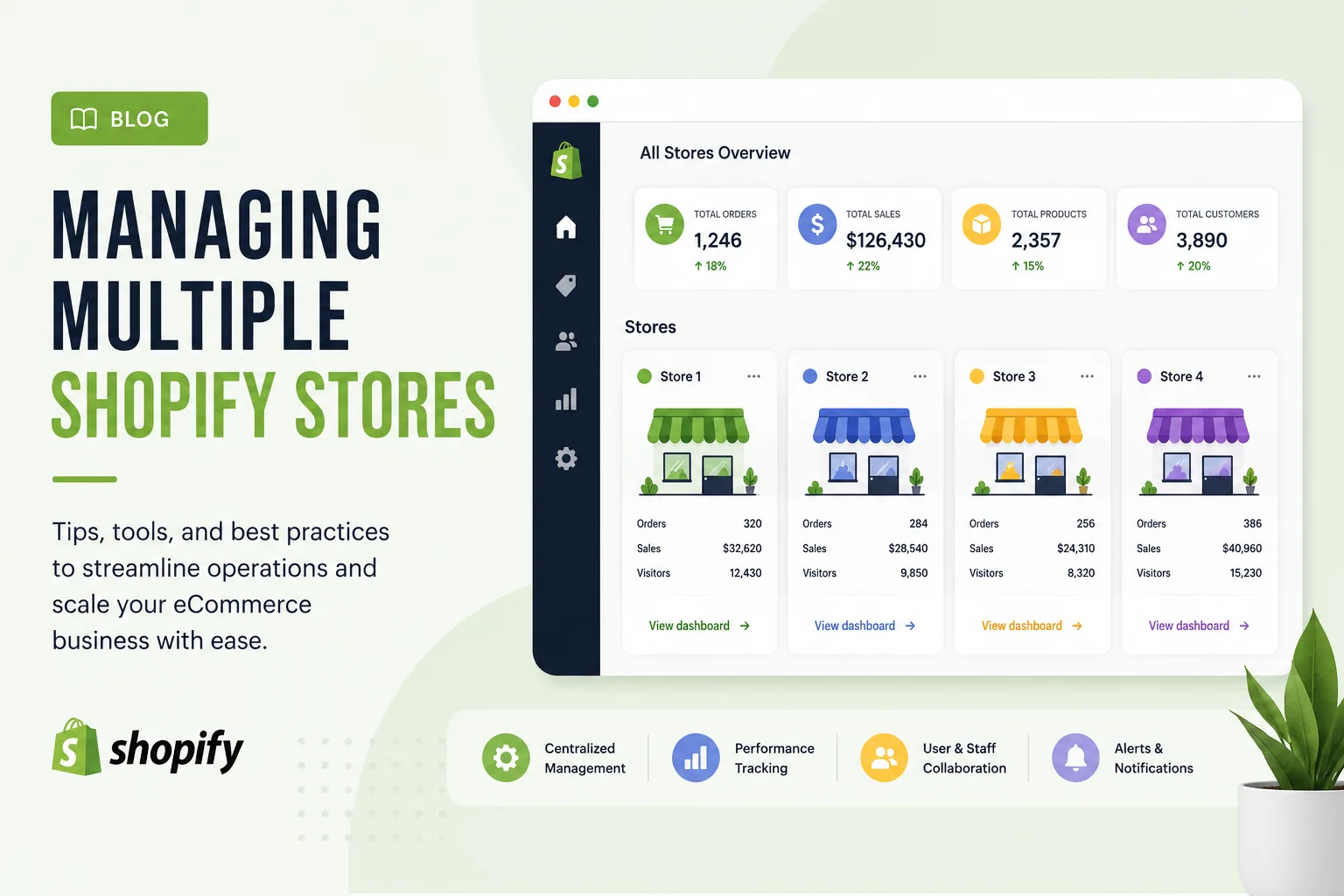
The biggest pain point of running multiple stores is that Shopify shows each store's data in isolation. Pull your numbers into a single dashboard so you can compare revenue, profit, and ad spend side by side. When you see all stores in one view, you instantly know which storefront deserves more attention and which is quietly bleeding money.
2. Standardize Your Product and Inventory Workflow
If you sell the same products across stores, manual updates are a recipe for errors. Use a single source of truth for product data and push changes outward. Connect a shared inventory system so stock levels stay accurate and you avoid overselling on one store while another sits idle.
3. Streamline Order Fulfillment
Route orders from every store into one fulfillment pipeline. Whether you use a 3PL or fulfill in-house, consolidating shipping labels, tracking, and supplier communication saves hours each week and reduces costly mistakes.
4. Use Clear Naming and Access Controls
Give each store a consistent naming convention for collections, tags, and discount codes. Assign team members specific roles per store so nobody is overwhelmed and accountability stays clear.
5. Review Performance on a Fixed Schedule
Set a weekly rhythm to review each store's key metrics. A short, repeatable review beats reacting to surprises. Look at profit margin, conversion rate, and inventory turnover for every store at the same time each week.
Final Thoughts
Managing multiple Shopify stores is about systems, not heroics. Centralize what you can, standardize your workflows, and give yourself a single place to see the truth across every storefront. Do that, and scaling from one store to ten feels manageable instead of maddening.
Run your whole store from one dashboard
Track orders, suppliers, inventory and real profit with Nugglets.
See NuggletsKeep reading
5 Tools Every Shopify Owner Running Multiple Stores Needs
Multi-Store Inventory Management: A Guide for Shopify Sellers


Comments 0